
Kitchen flooring has to do more than look good.
Think about what happens across a kitchen floor during an average week. Water splashes around the sink. Chairs slide back and forth. Heavy cookware gets dropped. Pets run through the room. Groceries come through the door. Food spills. Appliances occasionally leak. And in many homes, the kitchen is one of the most heavily traveled rooms in the house.
That makes choosing kitchen flooring different from selecting flooring for a bedroom or formal living space.
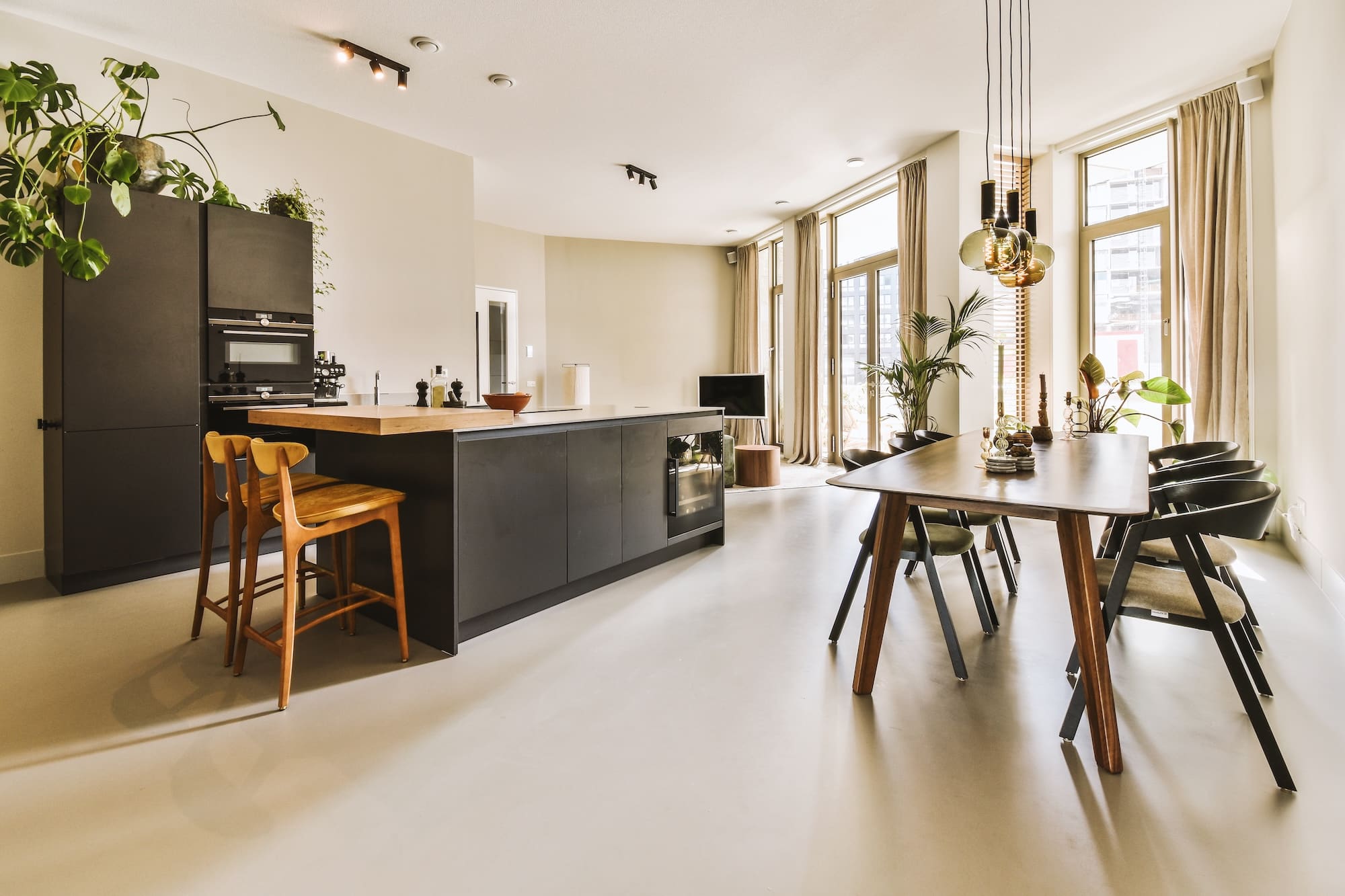
The best kitchen flooring options balance durability, moisture performance, maintenance, comfort, and design. And if your kitchen connects directly to a living or dining area, the decision becomes even more important because the floor may need to perform across multiple spaces.
So which material actually makes sense for your remodel?
What Should You Look for in Kitchen Flooring?
Before comparing materials, think about what you are asking the floor to withstand.
A good kitchen floor should be able to handle:
- Frequent foot traffic
• Food and beverage spills
• Moisture around sinks and dishwashers
• Chairs and stools moving regularly
• Dropped utensils and cookware
• Routine cleaning
• Pets and children, when applicable
Kitchens are high-traffic environments where floors encounter dirt, moisture, moving chairs, and dropped objects. Its flooring evaluations test products for factors including foot traffic, scratches, stains, dents, water, and sunlight.
That makes performance a much better starting point than appearance alone.

Is Porcelain Tile Good for Kitchen Floors?
Porcelain tile is one of the strongest options for homeowners who prioritize durability and water resistance.
Porcelain is defined by industry standards as an impervious tile with water absorption of 0.5 percent or less. The Tile Council of North America also notes that many porcelain products offer excellent durability and abrasion resistance.
https://tcnatile.com/resource-center/faq/porcelain-vs-non-porcelain/
For kitchens, porcelain offers several advantages:
- Excellent moisture resistance
• Strong scratch resistance
• Easy routine cleaning
• High durability
• Extensive design options
Modern porcelain can replicate wood, stone, concrete, and other materials, which gives homeowners considerable design flexibility.
There are tradeoffs, though.
Tile is hard underfoot. If you spend long periods cooking or preparing meals, standing on a hard tile floor may become uncomfortable. Consumer Reports specifically notes this consideration for porcelain kitchen flooring and suggests cushioned mats where homeowners stand for extended periods.
Dropped dishes are also unlikely to fare well against porcelain.
The floor may win that battle.
Your dinner plate probably will not.
What About Ceramic Tile?
Ceramic and porcelain belong to the same broad tile family, but they are not identical.
Porcelain generally has lower water absorption and can offer greater durability, while non-porcelain ceramic tile encompasses a wider range of performance characteristics.
Check the specifications for the particular tile because glaze durability and appropriate areas of use vary between products.
Ceramic can still be an excellent kitchen flooring option, particularly when:
- The product is rated for floor use
• The design works with the kitchen
• The installation surface is properly prepared
• The homeowner wants tile at a potentially different price point
The important point is not to assume every tile performs the same way.
Product specifications matter.
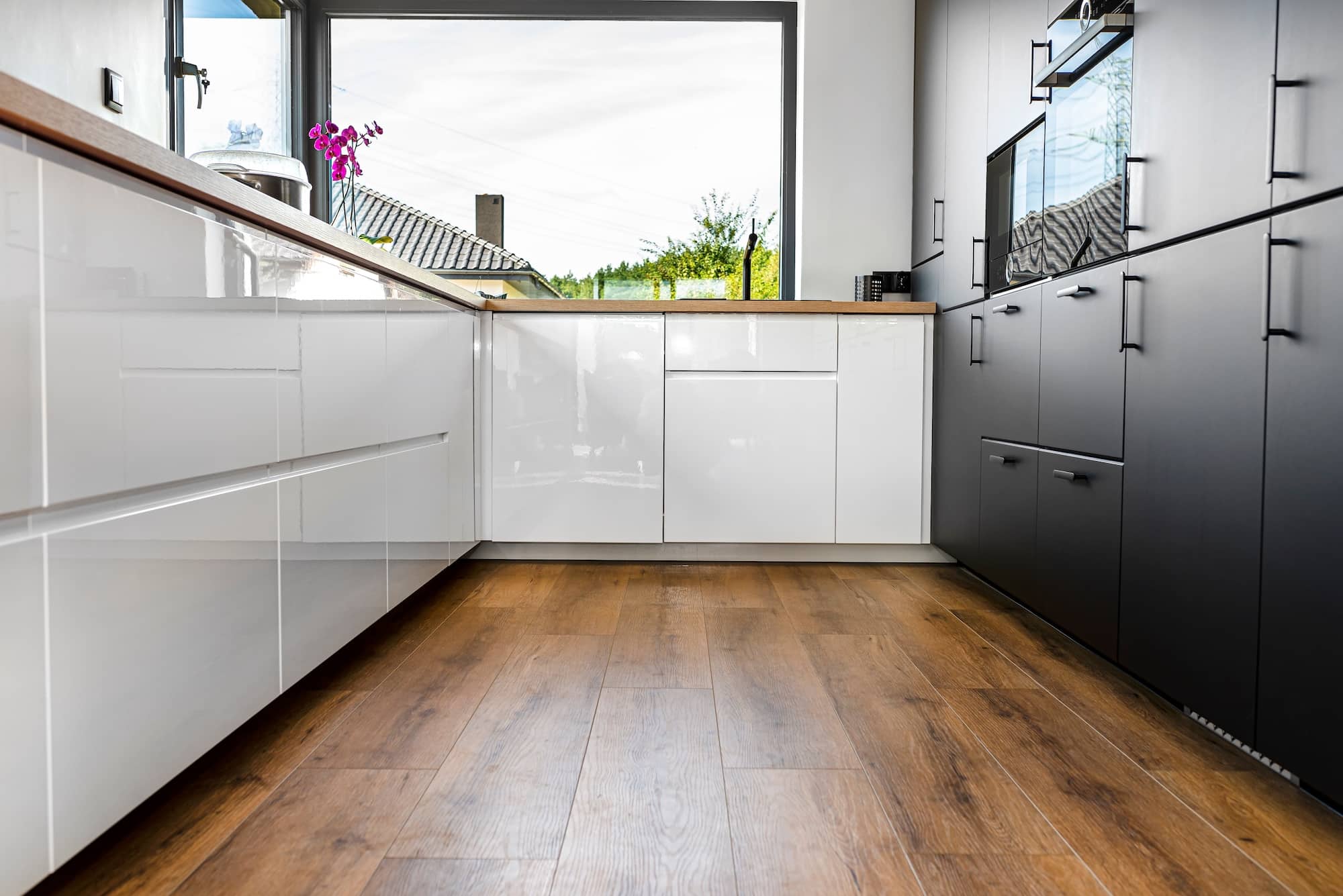
Is Luxury Vinyl Good for Kitchens?
Luxury vinyl flooring has become a serious contender for kitchen remodels because it addresses several issues homeowners encounter with harder surfaces.
Vinyl flooring can offer:
- Strong water resistance
• A softer feel underfoot
• Easier cleaning
• Wood and stone appearances
• Good everyday durability
Vinyl flooring is waterproof and provides an alternative to tile in the kitchen.
For homeowners who spend a lot of time standing in the kitchen, the more forgiving surface can be appealing.
But not all vinyl flooring performs equally.Scratch resistance, dent resistance, construction, locking systems, and overall quality vary between products. A product being labeled “luxury vinyl” does not automatically tell you how well it will perform.
Look at the specifications and warranty for the exact product being considered.
What Should You Know About Indoor Air Quality When Choosing Flooring?
Flooring is a large surface area within the home, so material selection can also be considered as part of the broader indoor environment.
The U.S. Environmental Protection Agency identifies building materials and furnishings among the potential factors affecting indoor air quality. EPA’s Indoor AirPlus program also calls for water-resistant flooring in kitchens and encourages the use of lower-emitting building materials.
When comparing manufactured flooring products, homeowners can look for recognized third-party certifications and review manufacturer information about emissions, adhesives, and installation requirements.
This does not mean one flooring category is automatically “healthy” and another is not.
It means product specifications matter just as much as material names.
Can You Put Hardwood Flooring in a Kitchen?
Yes, but hardwood requires a different mindset than porcelain or waterproof vinyl.
Wood brings warmth and continuity that is difficult to replicate with manufactured materials. It can be especially attractive when the kitchen connects directly to living or dining spaces with existing hardwood.
But wood responds to moisture.
Wood gains moisture and can swell in humid conditions, while losing moisture can cause shrinking. Excessive moisture can contribute to cupping and other changes in the flooring.
That means spills in a kitchen should be addressed promptly.
Hardwood can absolutely work in a kitchen, but homeowners need to be comfortable with its maintenance requirements and natural characteristics.
Is Engineered Hardwood Better for a Kitchen?
Engineered hardwood can provide another option for homeowners who want real wood.
Instead of being constructed from one solid piece of wood, engineered flooring typically uses a real wood surface over a layered structural base.
Engineered wood can tolerate higher humidity levels and generally expands and contracts less than solid hardwood.
That can make engineered wood worth considering in certain kitchen environments.
However, it is still wood.
Water resistance varies between products, and engineered flooring should not automatically be treated as waterproof.
Another consideration is refinishing.
Some engineered products have enough of a real-wood wear layer to be refinished, while others may have limited refinishing potential.
If long-term refinishing is important, ask about the thickness and construction of the specific product before purchasing.
Is Natural Stone a Good Kitchen Flooring Option?
Natural stone can create an impressive custom appearance and may work beautifully in certain kitchens.
Options can include:
- Slate
• Granite
• Limestone
• Travertine
• Marble
But “natural stone” is a broad category.
Different stones vary in porosity, hardness, maintenance requirements, stain resistance, and appropriate cleaning methods.
Some require sealing. Some may scratch or etch more easily than others. Polished surfaces may also behave differently when wet.
For homeowners considering natural stone, the exact stone should be evaluated rather than making decisions based on the category alone.
It can be an excellent choice, but it usually makes sense for someone comfortable with the maintenance characteristics of the particular material.
Which Kitchen Flooring Is Easiest to Maintain?
For many homeowners, maintenance matters just as much as appearance.
If easy cleaning is a priority, porcelain and quality vinyl are strong contenders.
Porcelain offers excellent resistance to moisture, stains, and wear, although grout will still require maintenance.
Vinyl provides a relatively simple surface for everyday cleaning and eliminates traditional grout joints in plank installations.
Wood requires more attention to standing water and cleaning methods, but it has another advantage: depending on the product, it may be possible to renew the surface instead of replacing the entire floor.
Wood floors can often be recoated and, when necessary, sanded and refinished. So “low maintenance” and “long lifespan” are not always the same thing.
Think about both.
Which Kitchen Flooring Is Most Comfortable?
Comfort is often overlooked during material selection.
A kitchen is one of the few rooms where homeowners may stand in the same area for extended periods while cooking, preparing meals, or cleaning.
Generally, resilient flooring such as vinyl feels more forgiving than porcelain or stone.
Wood also provides a warmer feel than tile.
Tile and stone are harder surfaces, although rugs or cushioned mats can improve comfort in primary work areas.
This consideration becomes particularly important for homeowners who cook frequently.
A floor can be extremely durable and still not be the floor you enjoy standing on every evening.
What Flooring Is Best for Homes With Children or Pets?
Busy households should prioritize a combination of:
- Scratch resistance
• Stain resistance
• Moisture performance
• Easy cleaning
• Durability
Porcelain performs extremely well against scratches and general wear.
Quality vinyl can provide good everyday durability while offering a softer surface.
Wood can work beautifully in family homes, but scratches, dents, and moisture exposure may become part of its natural aging process.
The right decision depends partly on expectations.
Some homeowners want a floor that continues looking as uniform as possible.
Others like the character that develops in natural materials over time.
Neither preference is wrong.
Should Kitchen Flooring Continue Into the Next Room?
This question has become particularly important as kitchens increasingly connect to dining and living areas.
Using one flooring material across adjoining spaces can create:
- Greater visual continuity
• Fewer transitions
• A more expansive appearance
• Better flow between rooms
But continuity should not come at the expense of performance.
For example, homeowners may love existing hardwood in the living room and want it to continue through the kitchen. That can create a beautiful result, but it also means accepting the moisture considerations associated with wood.
Alternatively, changing materials at a thoughtful architectural transition can allow each room to use flooring suited to its function.
There is no rule that says an open floor plan must use one flooring material everywhere.
The transition simply needs to look intentional.
Does the Subfloor Matter When Choosing Kitchen Flooring?
Absolutely.
Homeowners tend to focus on the material they will see, but the surface underneath it can determine whether the installation performs properly.
Ceramic and porcelain tile require a stiff, flat surface underneath to help prevent cracking. Different flooring materials also have different requirements for underlayment, moisture protection, adhesives, and installation methods.
This becomes particularly important during a remodel where old flooring is being removed.
Once the existing floor comes up, contractors may discover:
- Uneven subflooring
• Water damage
• Previous patches
• Multiple flooring layers
• Height differences between rooms
Those conditions should be addressed before the new finished floor is installed.
Which Kitchen Flooring Option Is Best?
There is no single winner. Instead, think about priorities.
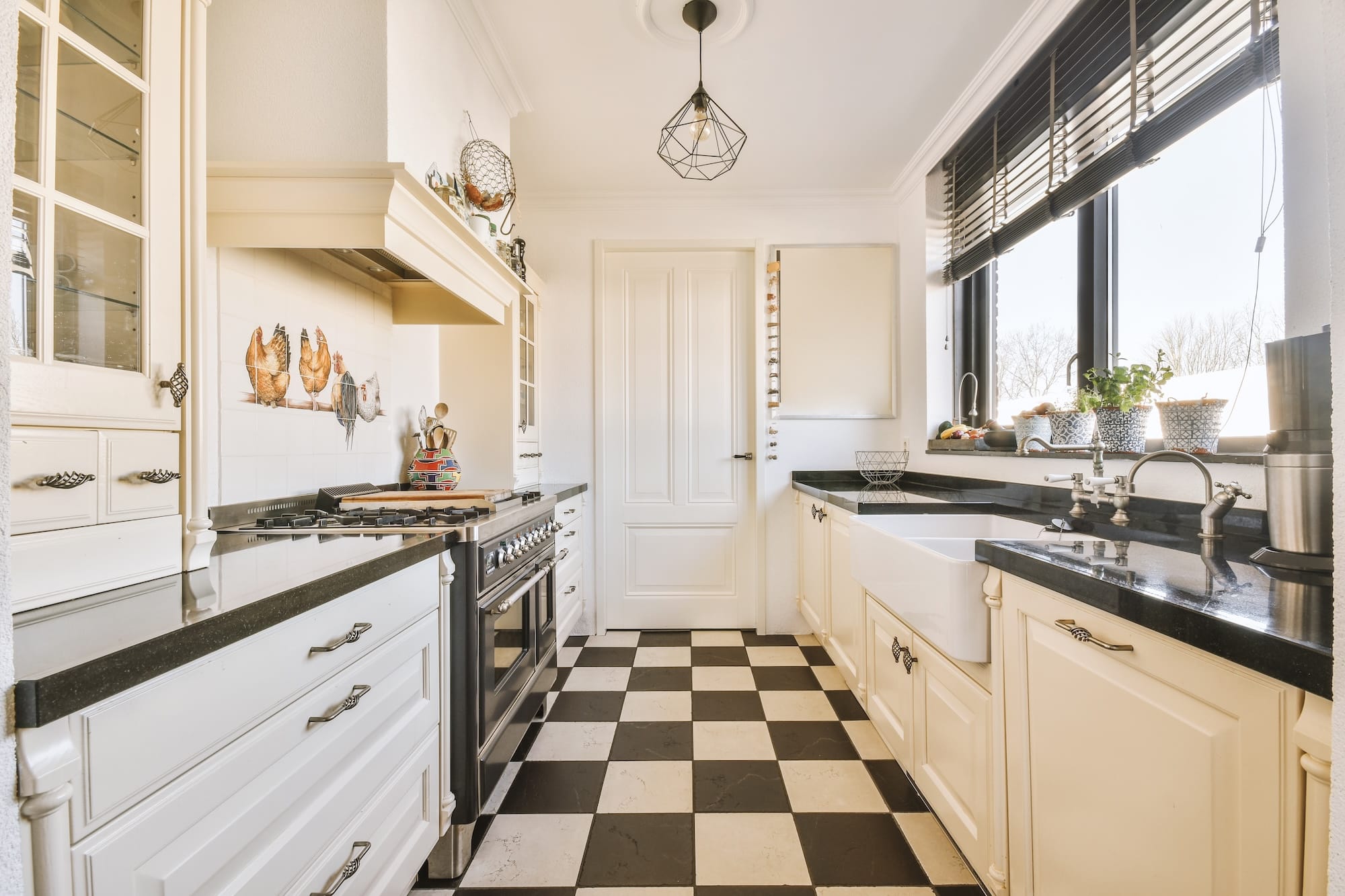
If maximum water and scratch resistance matter most, porcelain deserves serious consideration.
If you want water resistance with a more forgiving feel underfoot, quality vinyl may make sense.
If natural warmth and continuity with adjoining living areas are priorities, hardwood or engineered wood may be worth the additional moisture considerations.
If you want distinctive natural character and are comfortable with maintenance, stone may fit the project.
The better question is not, “What is the best kitchen flooring?”
It is:
“What is the best kitchen flooring for the way we use our home?”
Build the Kitchen From the Floor Up
Kitchen flooring affects much more than the appearance of the room.
It changes how the kitchen feels underfoot, how easily spills are handled, how materials transition into surrounding rooms, and how much maintenance the homeowner takes on after the remodel is complete.
At Refresh Remodeling, flooring is considered as part of the entire kitchen design.
Cabinetry, islands, appliances, flooring heights, adjoining rooms, traffic patterns, and the existing structure all influence the decision.
The goal is not simply to choose a beautiful material.
It is to choose a floor that belongs in your kitchen and continues working long after the remodel is finished.

Frequently Asked Questions About Kitchen Flooring
What is the best flooring for a kitchen?
There is no single best material for every kitchen. Porcelain offers exceptional durability and moisture resistance, vinyl combines water resistance with greater comfort, and wood provides natural warmth and long-term refinishing potential. The right choice depends on the household and remodeling goals.
What kitchen flooring is most durable?
Porcelain tile is one of the strongest options. Testing identifies porcelain as particularly resistant to scratches and everyday wear in high-traffic environments.
Is vinyl flooring good for kitchens?
Yes. Quality vinyl flooring can provide strong water resistance, durability, and a more forgiving surface underfoot than tile. Product performance varies, so compare the specifications of individual products.
Can you use hardwood flooring in a kitchen?
Yes. Hardwood can work in kitchens, particularly when homeowners want continuity with adjoining living spaces. However, spills should be addressed quickly because wood responds to moisture and humidity.
Is porcelain or vinyl better for a kitchen?
Porcelain generally offers greater resistance to scratching and a very hard finished surface. Vinyl can offer excellent water resistance while feeling softer underfoot. Which is better depends on the homeowner’s priorities.
What kitchen flooring is easiest to clean?
Porcelain and vinyl are both relatively easy to maintain. Porcelain does have grout joints that require cleaning, while vinyl plank installations typically do not.
Should kitchen flooring match the living room?
It does not have to. Continuing the same floor can make an open-concept space feel larger and more cohesive, but changing materials can make sense when the kitchen requires different performance characteristics.
Is waterproof flooring necessary in a kitchen?
Water resistance is an important consideration because kitchens are exposed to spills and potential appliance leaks.
Want to remodel your own home?
Posted in Kitchen Remodel