
Bathroom storage is often one of the first things homeowners notice when their existing space no longer meets their needs. Countertops become crowded with everyday products, towels end up stored in another room, and cabinets fill with items that are difficult to organize or access. While replacing an outdated vanity can help, it does not always solve the underlying storage problem.
Many bathrooms have opportunities for additional storage that homeowners may not immediately recognize. Recessed cabinets, built-in linen towers, wall-mounted storage, and custom cabinetry can provide practical solutions without requiring a larger vanity or sacrificing valuable floor space.
These improvements are particularly useful during a full bathroom remodel because walls, plumbing, electrical connections, and surrounding fixtures can be evaluated together. Instead of working around the limitations of an existing layout, homeowners can consider how the entire bathroom might function more efficiently.
Storage has also become an important part of creating a comfortable bathroom. Recent 2026 bathroom remodeling research found that 67% of renovating homeowners identified organized storage as a feature that makes their remodeled bathroom more relaxing. Cleanliness and spacious showers ranked slightly higher, reinforcing the connection between practical design and everyday comfort.
For homeowners planning a custom bathroom renovation, exploring storage options beyond the vanity can create a space that feels more organized, functions more efficiently, and remains comfortable to use over time.

Why Is Bathroom Storage Important During a Remodel?
Bathroom storage affects more than the appearance of the room. It influences how easily homeowners can complete everyday routines, maintain clean surfaces, and access frequently used items.
A bathroom with insufficient storage often requires products to remain on countertops, around the bathtub, or on open shelves that were not originally intended for everyday supplies.
This can make the room feel crowded even when the bathroom itself is relatively large.
Additional storage can also reduce the need to move between rooms to retrieve towels, toiletries, cleaning products, and other necessities.
However, simply adding more cabinets is not always the best solution.
A large storage cabinet may provide additional capacity but interfere with movement around the bathroom. Deep shelves can become difficult to organize, while cabinets positioned too high may be inconvenient for everyday use.
The goal should be to create storage that supports the household’s routines while preserving the bathroom’s available space.
During a full remodel, these decisions can be incorporated into the layout before fixtures and finishes are installed.
What Are the Best Bathroom Storage Ideas Beyond the Vanity?
The best bathroom storage solution depends on the room’s dimensions, available wall space, and the types of items that need to be stored.
For some homeowners, a recessed medicine cabinet may provide enough additional space to keep the countertop organized. Others may benefit from a built-in linen tower, custom shelving, or cabinetry incorporated into an unused section of the bathroom.
Several options are worth considering:
- Recessed medicine cabinets
- Built-in linen towers
- Floor-to-ceiling storage cabinets
- Recessed shelving between wall studs
- Wall-mounted cabinets
- Custom cabinetry above the toilet
- Built-in storage near the bathtub
- Concealed cabinets for cleaning supplies
- Open shelving for towels and frequently used items
Each option has different installation requirements and affects the room differently.
Rather than selecting several storage features independently, homeowners should consider how the pieces will work together.
A combination of concealed cabinetry and accessible open storage often provides a practical balance between organization and convenience.
Are Recessed Medicine Cabinets Worth It?
Recessed medicine cabinets are one of the most practical ways to add storage without occupying additional floor space. Unlike surface-mounted cabinets that extend outward from the wall, recessed medicine cabinets are installed within a framed wall opening. This allows much of the cabinet’s depth to remain concealed, creating a relatively streamlined appearance.
Recessed medicine cabinets can be particularly useful for storing smaller everyday items such as skincare products, medications when appropriate for the household, toothbrushes, and other toiletries. They also help reduce countertop clutter by placing frequently used products within easy reach.
However, installing a recessed cabinet is not always as simple as cutting an opening in the wall.
The wall may contain plumbing lines, electrical wiring, or structural framing that affects where the cabinet can be positioned. In some cases, framing modifications may be required, and those changes must be evaluated before installation.
During a full bathroom remodel, recessed cabinetry can be planned before drywall and other finishes are completed, making it easier to coordinate the cabinet with surrounding construction.

Can You Install Bathroom Storage Between Wall Studs?
In some bathrooms, the space between wall studs can be used to create shallow recessed storage.
Standard residential walls often contain cavities between framing members that may accommodate narrow shelves or specialized storage cabinets. These spaces can be useful for smaller items that do not require deep shelving. For example, a recessed cabinet may provide storage for toiletries, extra soap, or other bathroom supplies without extending significantly into the room.
However, the available cavity depth depends on the wall construction.
A typical interior partition may provide less usable depth than homeowners expect, particularly after accounting for drywall and the cabinet itself. Plumbing, electrical wiring, insulation, and structural components can also limit installation options.
Load-bearing walls require additional consideration because framing members cannot simply be removed to create larger openings. For these reasons, recessed storage should be evaluated as part of the remodeling design rather than treated as a modification that can be made anywhere.
When the wall construction allows it, recessed cabinetry can provide valuable storage while maintaining a clean appearance.
What Is a Built-In Bathroom Linen Tower?
A built-in linen tower is a tall cabinet designed to store towels, washcloths, toiletries, and other bathroom supplies.
Unlike a freestanding storage cabinet, a built-in linen tower is incorporated into the bathroom’s cabinetry or surrounding construction. This allows the cabinet to coordinate with the vanity, wall finishes, and overall bathroom design. Linen towers can include a combination of adjustable shelves, drawers, and enclosed compartments. For example, upper shelves may provide storage for extra towels, while lower drawers can accommodate smaller products or frequently used supplies.
A custom linen tower can also be designed around the available space. In a bathroom with a narrow section of unused wall, a relatively slim cabinet may provide meaningful storage without interfering with the room’s layout.
However, homeowners should consider how the cabinet doors and drawers will operate.
A tall cabinet positioned too close to the toilet, shower entrance, or another fixture may create accessibility problems even if the cabinet technically fits. The most effective linen tower provides storage that is easy to reach without making the bathroom feel crowded.
Are Floor-to-Ceiling Bathroom Cabinets a Good Idea?
Floor-to-ceiling cabinetry can be an effective solution when homeowners need substantial storage but have limited wall space. By extending vertically, these cabinets take advantage of areas that might otherwise remain unused. They can provide room for extra towels, bulk toiletries, cleaning supplies, and other household items.
However, the upper portions of tall cabinets may not be convenient for everyday use.
Frequently used products should generally be stored at comfortable reaching heights, while higher shelves can be reserved for items needed less often.
The cabinet’s depth also matters.
A deep floor-to-ceiling cabinet may provide considerable capacity but extend too far into the bathroom, making movement around nearby fixtures uncomfortable. Custom cabinetry allows the dimensions to be adjusted to the available space. For example, a shallow cabinet may provide enough room for folded towels and toiletries without requiring the depth of a traditional linen closet.
When designed appropriately, floor-to-ceiling cabinetry can make a bathroom feel more organized while reducing the need for several smaller storage pieces.
Can You Add a Linen Closet During a Bathroom Remodel?
Yes. A full bathroom remodel may provide an opportunity to incorporate a dedicated linen closet, depending on the existing layout.
In some homes, an unused section of wall or an adjacent closet can be reconfigured to provide additional bathroom storage. Other projects may involve adjusting the placement of fixtures or modifying nonstructural partitions to create space for a new closet.
However, adding a linen closet should not compromise the bathroom’s functionality.
A closet that requires reducing the available space around the toilet or creating a narrow passage may not be worth the additional storage. The location of the closet is equally important. Ideally, towels and frequently used supplies should be accessible without requiring homeowners to move around other fixtures or reach across the room.
A custom linen closet can also be designed with adjustable shelving to accommodate changing storage needs. For homeowners who currently keep bathroom supplies in a hallway closet or another room, incorporating dedicated storage may make everyday routines more convenient.
How Can You Add Storage to a Small Bathroom?
Small bathrooms often benefit most from storage solutions that use vertical space or existing wall cavities. Because floor space is limited, adding freestanding cabinets can make the room feel smaller and interfere with movement.
Recessed medicine cabinets, shallow wall-mounted cabinetry, and built-in shelving can provide additional storage without requiring a larger bathroom footprint. The space above the toilet may also accommodate a cabinet or shelving, provided the installation does not interfere with comfortable use or maintenance of the fixture.
Another option is incorporating narrow cabinetry into areas that would otherwise remain unused. For example, a small section of wall beside the vanity may provide enough room for a slim storage cabinet. However, the dimensions must be evaluated carefully. A cabinet that is only a few inches too deep can affect how comfortably someone moves through a small bathroom.
The best approach is to prioritize the items that need to be stored and select solutions that provide convenient access without making the room feel crowded.
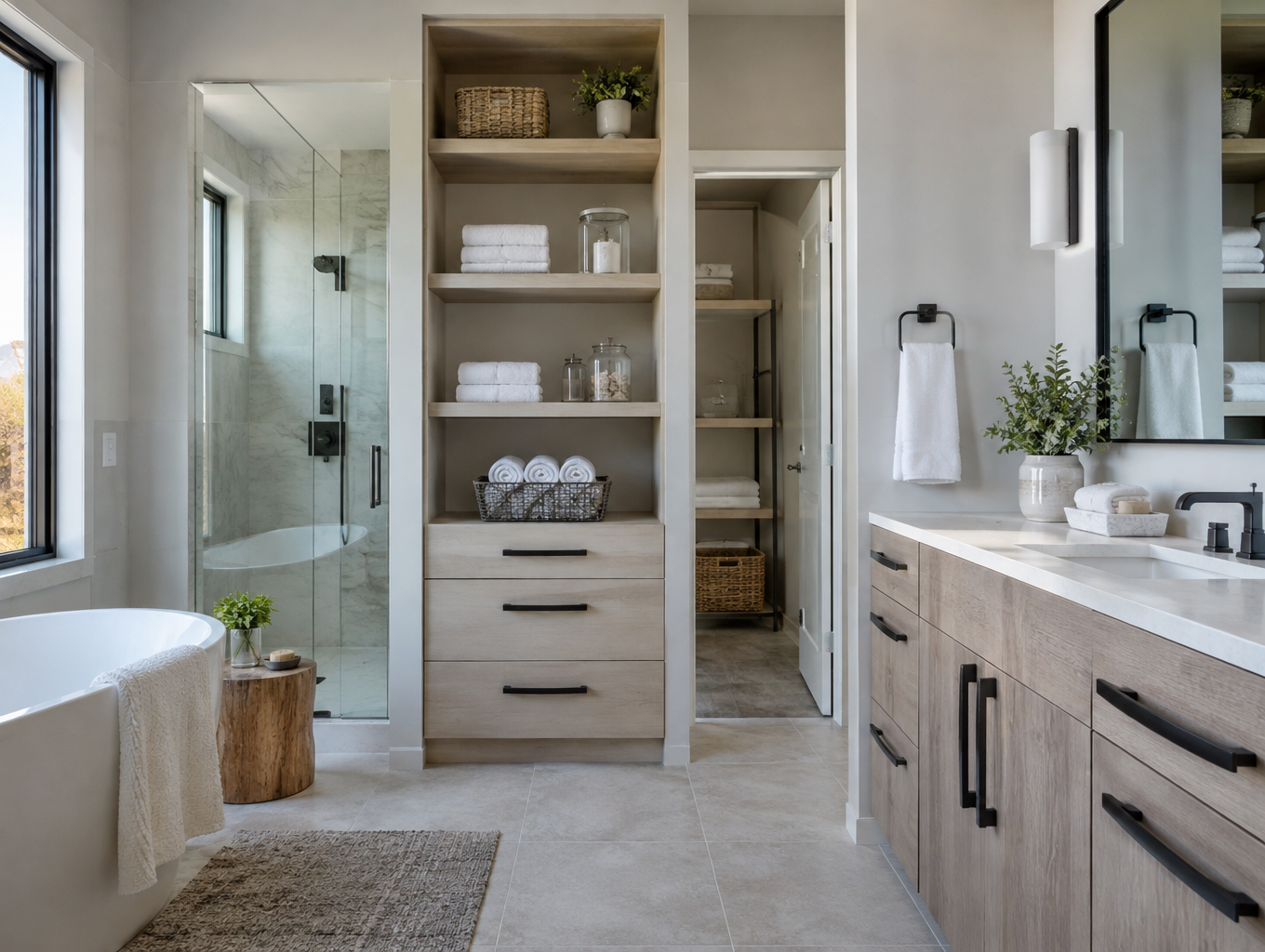
Is Storage Above the Toilet a Good Idea?
The wall above the toilet is often underused, making it a potential location for additional bathroom storage. A shallow cabinet can provide space for extra toilet paper, toiletries, and other supplies that do not need to be stored near the sink. Open shelving can also work, particularly when homeowners want convenient access to towels or decorative items.
However, the storage should be positioned carefully.
A cabinet that extends too far into the room may make the toilet area feel cramped or create a risk of someone striking their head when standing.The installation should also allow access to the toilet tank and other components that may require maintenance.
Homeowners should consider whether cabinet doors can open comfortably without interfering with nearby walls or fixtures. During a custom remodel, cabinetry above the toilet can be coordinated with the room’s other storage features to create a more consistent appearance.
Should Bathroom Storage Be Open or Enclosed?
Both open shelving and enclosed cabinetry can be useful, but they serve different purposes.
Open shelves provide convenient access to frequently used items and can make a bathroom feel less visually crowded than large cabinets. They are often used for folded towels, decorative accessories, or products that homeowners want to keep within easy reach.
However, open shelving also exposes stored items to dust and bathroom humidity.
Products may need to be cleaned more frequently, and the shelves can begin to look cluttered when too many items are displayed. Enclosed cabinetry provides a more concealed storage solution. It can help keep the bathroom looking organized by hiding extra toiletries, cleaning products, and other supplies.
However, cabinet doors require clearance to open, and deeper cabinets may make smaller items difficult to locate. A combination of open and enclosed storage is often the most practical solution.Open shelves can accommodate frequently used items, while enclosed cabinets provide space for supplies that do not need to remain visible.
How Does Bathroom Humidity Affect Storage Cabinets?
Bathrooms experience regular changes in humidity because of showering, bathing, and other activities that introduce moisture into the air. This moisture can affect cabinetry, shelving, and stored items when ventilation is inadequate.
Wood-based materials may swell or deteriorate when repeatedly exposed to excessive moisture, while certain finishes can become damaged over time. Poorly ventilated cabinets may also develop musty odors, particularly when damp towels or other wet items are stored inside.
Established indoor moisture control recommendations emphasize maintaining indoor relative humidity below 60%, ideally between 30% and 50%, and addressing moisture problems before they damage building materials.
For bathroom storage, this means selecting appropriate cabinetry materials and ensuring the room has effective ventilation. Cabinets should not be installed against walls with unresolved moisture problems.
Homeowners should also avoid storing damp towels in enclosed compartments where they cannot dry properly. A well-designed storage system should protect the items inside while remaining durable in a bathroom environment.
What Materials Are Best for Bathroom Storage Cabinets?
Bathroom cabinetry should be constructed from materials appropriate for environments where humidity and occasional water exposure are expected.
Solid wood, plywood, engineered wood products, and other cabinet materials may all be used, but their performance depends on the specific product, construction quality, and protective finishes. For example, cabinet-grade plywood with appropriate finishing can provide a durable foundation for custom cabinetry.
Certain engineered products are also manufactured with moisture-resistant properties. However, no ordinary bathroom cabinet should be treated as completely waterproof simply because it has a protective finish.
Edges, joints, and areas around plumbing penetrations are particularly important because water can enter through openings in the finish. Hardware selection also matters. Hinges, drawer slides, and other components should be appropriate for the bathroom environment and capable of supporting the expected use.
During a custom remodel, cabinetry materials should be selected alongside the room’s ventilation, plumbing, and overall design.
Can You Build Storage Into a Bathroom Wall?
Yes. Built-in storage can sometimes be incorporated into the wall construction during a bathroom remodel. This may include recessed cabinets, shallow shelving, or custom niches designed for specific items.
The feasibility depends on the wall’s structure and the systems located inside it. For example, an interior partition without plumbing or electrical connections may provide more flexibility than a wall containing supply lines, drains, or ventilation ducts.
Exterior walls introduce additional considerations involving insulation, air sealing, and moisture management. Removing or modifying framing members can also affect the wall’s structural performance. For these reasons, homeowners should not assume that every wall cavity can accommodate recessed storage.
A remodeling contractor can evaluate the existing construction and determine whether the desired storage can be incorporated without compromising the wall. When properly planned, built-in storage can provide a clean appearance while making efficient use of available space.
Can You Add Storage Near a Bathtub?
Storage near a bathtub can improve convenience by keeping towels and bathing products within easy reach. Depending on the layout, this may include recessed wall shelving, a built-in cabinet, or a shallow storage niche positioned near the bathing area.
However, the location should be selected carefully.
Cabinetry installed too close to regular water exposure may require additional protection, and certain materials may not be appropriate for areas that are frequently wet. Homeowners should also consider whether the storage will be accessible while entering or exiting the bathtub.
A cabinet door or projecting shelf should not create an obstacle in an area where people need stable footing and adequate room to move. In larger bathrooms, a dedicated towel cabinet positioned near the bathtub may provide convenience without placing cabinetry directly within the wet area.
The goal should be to keep necessary items accessible while protecting the storage materials from unnecessary moisture exposure.
Can You Add Hidden Storage to a Bathroom?
Hidden storage can be useful for homeowners who prefer a clean, uncluttered appearance. This may include recessed cabinets with doors that coordinate with the surrounding wall, concealed compartments within custom cabinetry, or storage integrated into architectural features.
For example, a shallow cabinet can sometimes be incorporated into a wall so that its door sits nearly flush with the finished surface.
Custom cabinetry may also include specialized compartments for toiletries, cleaning products, or other supplies. However, concealed storage should remain easy to access. A cabinet that is difficult to open or requires moving several other items may not provide meaningful convenience.
Homeowners should also consider future maintenance requirements. Access panels for plumbing and mechanical components should remain accessible and should not be permanently concealed behind storage installations. A well-designed hidden storage feature provides practical organization without making the bathroom more complicated to use.
How Can You Organize Bathroom Storage for Multiple People?
Bathrooms shared by several household members often require more thoughtful storage planning than bathrooms used by one person. Different people may have separate toiletries, grooming products, medications, and other personal items that need dedicated space. Without a clear organization system, shared cabinets can quickly become crowded.
One approach is to create separate storage areas within a larger cabinet or linen tower. For example, adjustable shelves and drawers can provide designated sections for each household member. Frequently used items should remain easy to reach, while bulk supplies can be stored in less accessible areas.
For families with children, storage placement may also need to account for safety and supervision. Products that could be hazardous to children should be stored securely rather than simply placed on an open shelf.
A custom bathroom remodel allows storage to be planned around the number of people using the room and the types of items they need to keep accessible.
How Should Bathroom Storage Be Designed for Aging in Place?
Bathroom storage should remain convenient as homeowners’ mobility and physical needs change. Cabinets positioned too high may become difficult to reach, while deep lower cabinets can require uncomfortable bending or kneeling.
Pull-out shelves, drawers, and storage positioned at comfortable heights can make everyday items easier to access.
Homeowners should also consider the amount of space available in front of cabinets. A cabinet may provide substantial storage but become difficult to use if there is not enough room to approach it comfortably.
Established accessible reach guidelines identify a typical unobstructed reach range of 15 to 48 inches above the finished floor for covered accessible applications. Although these standards do not automatically apply to private residential bathrooms, they provide useful reference points when planning storage for homeowners with mobility concerns.
For bathrooms intended to support long-term use, frequently needed items should be stored where they can be reached without unnecessary stretching, bending, or balancing.
The most effective accessible storage is not necessarily specialized. It is storage designed around the people who will use it.
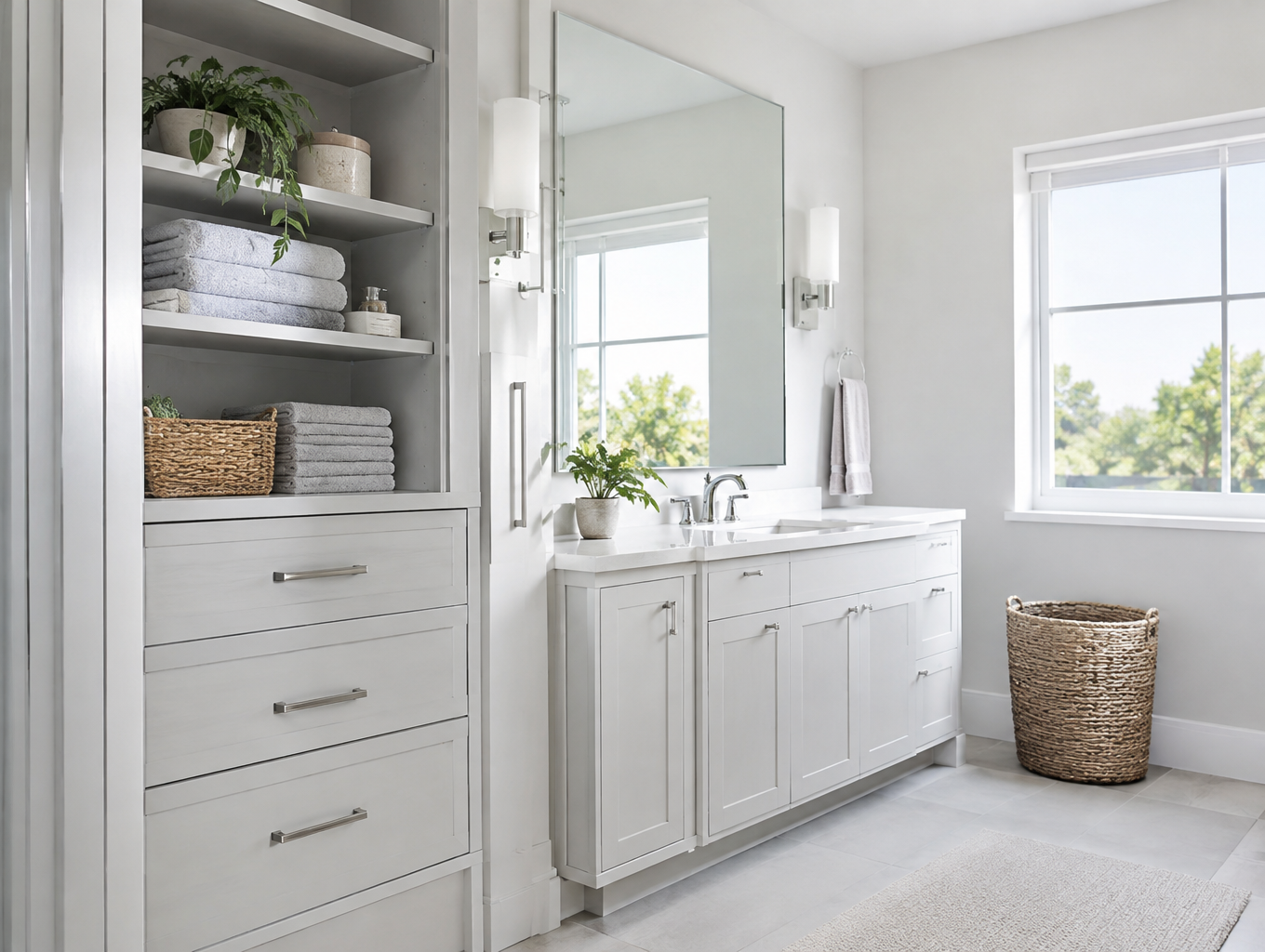
Do Bathroom Storage Cabinets Need Electrical Outlets?
Some bathroom storage features may benefit from electrical connections, particularly when homeowners want to keep certain grooming devices organized and ready for use. For example, a custom cabinet may include a designated area for an electric toothbrush charger, grooming tools, or other small electrical devices.
However, electrical installations inside cabinets require careful planning.
The equipment must be suitable for the intended location, and the installation must comply with applicable electrical requirements. Bathroom receptacles generally require ground-fault circuit interrupter protection to reduce the risk of electric shock.
Current electrical safety recommendations for GFCI protection explain why these protective devices are important in bathrooms and other locations where electrical equipment may come into contact with moisture.
Homeowners should also consider heat-producing devices such as hair dryers and styling tools. These appliances should not be operated or stored while hot in enclosed spaces unless the cabinet system is specifically designed and approved for that purpose. When electrical features are planned before cabinetry installation, wiring and receptacle placement can be coordinated with the storage design.
Should You Add Storage Before Replacing the Vanity?
Storage should be considered alongside vanity selection rather than as a separate decision. A larger vanity may provide additional cabinet space, but it can also occupy more floor area and make the bathroom feel crowded.
In some cases, a smaller vanity combined with a dedicated linen tower or recessed cabinet may provide better overall storage. For example, a homeowner may prefer a vanity with drawers for everyday toiletries and a separate tall cabinet for towels and bulk supplies. This arrangement can make stored items easier to organize because different categories have dedicated locations.
The bathroom’s layout should determine the best combination. A narrow bathroom may benefit from shallow wall-mounted storage, while a larger primary bathroom may accommodate more substantial built-in cabinetry. Considering the vanity and surrounding storage together helps homeowners avoid purchasing fixtures that do not work well within the available space.
How Much Does Built-In Bathroom Storage Cost?
The cost of built-in bathroom storage depends on the type of cabinetry, materials, dimensions, and construction required.
A simple recessed medicine cabinet may involve relatively limited modifications when the existing wall can accommodate it.
A custom linen tower or floor-to-ceiling cabinet may require more extensive cabinetry work and finishing.
Other projects may involve framing changes, electrical modifications, plumbing relocation, or alterations to the surrounding bathroom layout.
Several factors influence the overall investment:
- Size and configuration of the storage feature
- Custom cabinetry versus standard cabinet dimensions
- Cabinet materials and finishes
- Drawer slides, hinges, and other hardware
- Wall framing and structural modifications
- Plumbing or electrical relocation
- Lighting and integrated electrical features
- Installation and finishing requirements
The cost may also depend on whether the storage is being added during a full bathroom remodel or installed as a separate project.
When walls, flooring, cabinetry, and other finishes are already being updated, additional storage can often be coordinated with the larger renovation.
Adding recessed cabinets or relocating walls after the bathroom is complete may require opening and repairing finished surfaces.
Homeowners should evaluate the complete scope of work rather than comparing cabinet prices alone.
Does Built-In Bathroom Storage Add Home Value?
Built-in bathroom storage can improve the functionality and appeal of a remodeled bathroom, but it does not guarantee a specific increase in resale value. Homebuyers often appreciate bathrooms that provide adequate storage without feeling crowded. A dedicated linen cabinet, recessed medicine cabinet, or other well-integrated storage feature may make the room more convenient and visually organized.
However, the quality of the design matters.
Oversized cabinets that restrict movement or make the bathroom feel smaller may reduce the benefit of the additional storage. Likewise, storage that is difficult to reach or poorly positioned may not be particularly useful. The best approach is to prioritize functionality, durable materials, and a layout that feels comfortable.
A bathroom designed around everyday needs is more likely to remain useful regardless of future design trends.
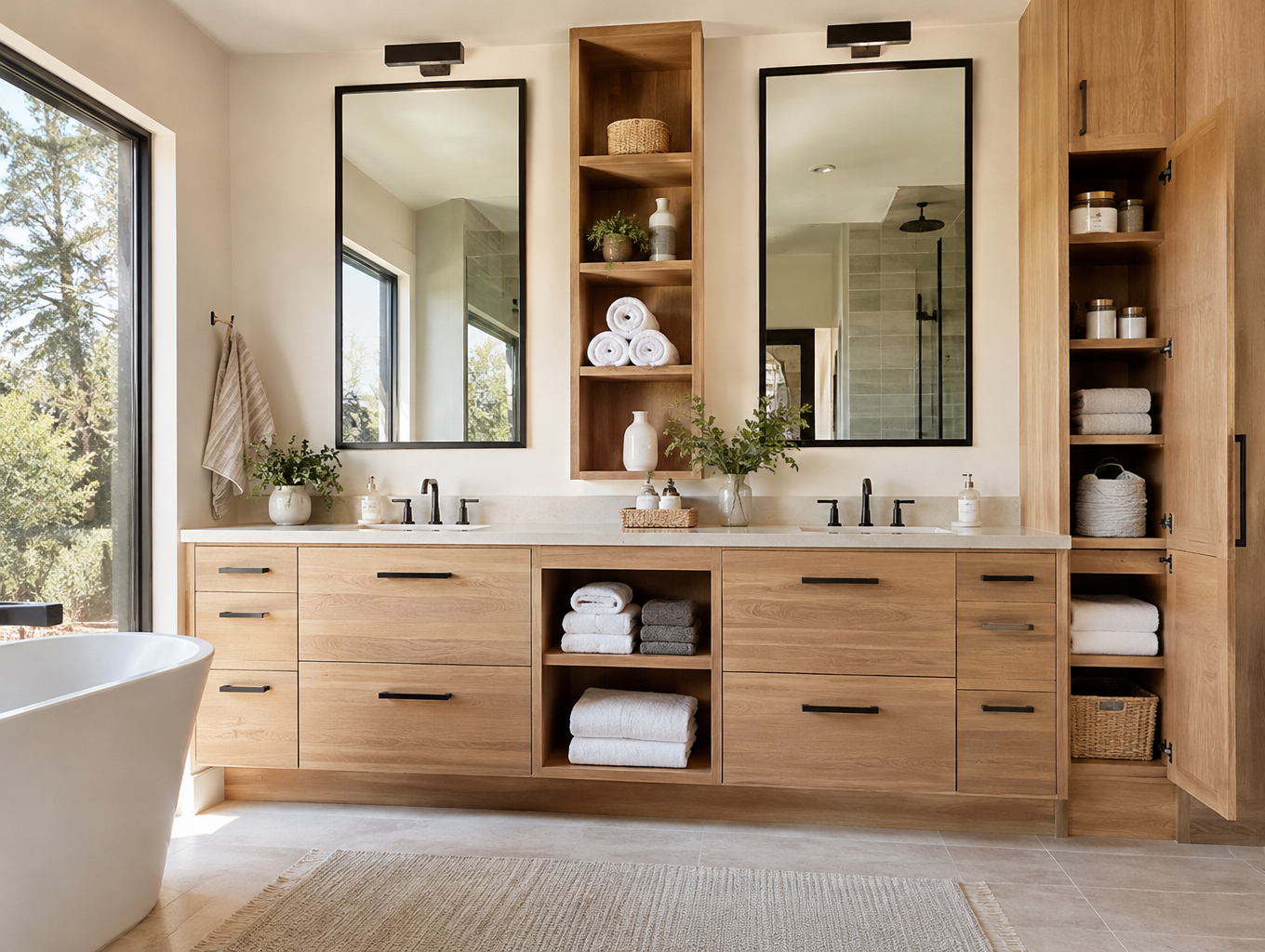
What Should You Consider Before Adding Bathroom Storage?
Before selecting storage features, homeowners should identify which items need dedicated space and where those items are most frequently used.
This helps determine whether the bathroom needs additional enclosed cabinetry, accessible open shelving, or a combination of both.
Several questions are worth discussing:
- What items are currently stored outside the bathroom because there is not enough space?
- Would a recessed cabinet help reduce countertop clutter?
- Is there enough room for a built-in linen tower?
- Can existing wall cavities accommodate additional storage?
- Would shallow cabinetry be more practical than deeper cabinets?
- How will cabinet doors and drawers affect movement around the bathroom?
- Are the selected materials appropriate for bathroom humidity?
- Will electrical connections be needed inside or near the storage?
- Can frequently used items be reached comfortably?
- How will the new storage coordinate with the vanity and surrounding fixtures?
These considerations help homeowners select storage solutions that address actual needs rather than simply adding cabinets wherever space appears available.
Better Bathroom Storage Starts With Better Planning
Bathroom storage does not have to be limited to the vanity.
Recessed cabinets, built-in linen towers, wall-mounted storage, and custom shelving can provide practical ways to keep everyday supplies organized while preserving valuable floor space. However, the best solutions depend on the bathroom’s dimensions, wall construction, plumbing, electrical systems, and the needs of the people using the room.
A storage feature that works well in one bathroom may not be appropriate for another.
At Refresh Remodeling, full custom bathroom remodeling allows homeowners to evaluate storage as part of the complete renovation. Cabinetry, walls, plumbing, electrical connections, and surrounding fixtures can be coordinated to create a bathroom that is more organized and comfortable to use.
For homeowners throughout the Piedmont Triad and Greater Charlotte areas of North Carolina, thoughtful storage planning can make a meaningful difference in how a remodeled bathroom functions every day.

Frequently Asked Questions About Bathroom Storage
How can I add storage to a bathroom without making it smaller?
Recessed cabinets, shallow wall-mounted storage, and built-in shelving can provide additional storage without occupying substantial floor space. The best option depends on the bathroom’s layout and available wall construction.
What is the best storage solution for a small bathroom?
Recessed medicine cabinets, narrow linen towers, and shallow wall-mounted cabinets are often useful in smaller bathrooms. These options can provide storage while preserving space around the toilet, vanity, and shower.
Can you install cabinets between wall studs?
Yes, certain wall cavities can accommodate shallow recessed cabinets or shelving. However, plumbing, electrical wiring, insulation, and structural framing may limit where these features can be installed.
Are recessed medicine cabinets worth it?
Recessed medicine cabinets can be worthwhile because they provide accessible storage for everyday toiletries without projecting significantly into the bathroom. Installation requirements depend on the existing wall construction.
How much bathroom storage do you need?
The appropriate amount depends on the number of people using the bathroom and the items they need to store. Homeowners should consider towels, toiletries, cleaning products, grooming tools, and other supplies when planning cabinetry.
Can you add a linen closet to an existing bathroom?
Yes, depending on the available space and layout. Adding a linen closet may involve modifying walls, adjusting nearby fixtures, or incorporating custom cabinetry into an unused section of the room.
Is open shelving good for bathroom storage?
Open shelving can be useful for towels and frequently used items, but it also exposes stored products to dust and humidity. A combination of open shelving and enclosed cabinetry often provides a practical balance.
Are floor-to-ceiling bathroom cabinets practical?
Floor-to-ceiling cabinets can provide substantial storage without requiring a large footprint. However, upper shelves may be difficult to reach, so frequently used items should be stored at comfortable heights.
What materials are best for bathroom storage cabinets?
Bathroom cabinetry should use materials and finishes appropriate for humid environments. Proper construction, sealed edges, moisture-resistant finishes, and effective ventilation all contribute to long-term durability.
Can you add electrical outlets inside bathroom cabinets?
Electrical outlets may be incorporated into certain bathroom cabinet designs when installed according to applicable electrical codes and product requirements. GFCI protection and appropriate placement are important, particularly when the storage is intended for grooming devices or other electrical equipment.
Want to remodel your own home?
Posted in Bathroom Remodel