
Bathroom remodeling has traditionally focused on improving the layout, replacing outdated fixtures, and creating a space that is more comfortable to use. While those priorities remain important, homeowners now have additional options for controlling how their showers function, including digital systems that can remember preferred water temperatures, manage multiple showerheads, and allow the shower to be started before someone steps inside.
These features are part of a growing category of bathroom technology commonly referred to as smart shower systems. Instead of relying entirely on mechanical handles to adjust water temperature and flow, these systems use electronic controls connected to a digital mixing valve.
For some homeowners, the convenience of selecting a preferred temperature with the touch of a button makes a smart shower appealing. Others are interested in having more control over multiple showerheads or creating personalized settings for different members of the household.
However, smart shower technology also introduces additional considerations involving plumbing, electrical connections, maintenance, and long-term reliability. Because these systems are generally installed behind finished shower walls, deciding whether to include one is particularly important during a full bathroom remodel. Understanding what smart shower systems actually offer can help homeowners determine whether the added functionality is worth the investment.

What Is a Smart Shower System?
A smart shower system uses electronic controls to manage some or all of the shower’s functions. Depending on the system, homeowners may be able to adjust water temperature, control flow, select different showerheads, or save preferred settings for future use. Traditional shower valves rely on mechanical components operated through handles or knobs. Smart shower systems use a digital valve that responds to commands from an electronic controller, which may be mounted inside or outside the shower.
Some systems also connect to a smartphone application or compatible smart home platform, allowing additional control over certain features. For example, digital shower technology can provide multiple personalized presets and allow users to operate their shower through a wall-mounted controller, mobile application, or supported voice assistant.
The exact features vary significantly between products, so homeowners should evaluate what a particular system can do rather than assuming every smart shower offers the same capabilities.
How Does a Smart Shower Work?
A smart shower uses an electronically controlled valve to regulate water temperature and, on systems with that capability, water flow. Hot and cold water enter the valve, where the system adjusts the mixture to reach the temperature selected by the user. Sensors and electronic controls help maintain the requested setting as the shower operates. The homeowner typically interacts with a digital controller mounted on the shower wall. Depending on the system, the controller may include a touchscreen, physical buttons, or a combination of the two.
Some systems also allow the shower to be activated remotely, which can be convenient when homeowners want the water to reach a preferred temperature before entering.
However, the shower still depends on the home’s existing plumbing and hot water supply. A smart controller cannot compensate for inadequate water pressure, an undersized water heater, or plumbing limitations that prevent the shower from delivering the requested performance. For that reason, smart shower technology should be considered alongside the entire plumbing system rather than treated as an independent upgrade.

What Is the Difference Between a Digital Shower and a Traditional Shower?
The primary difference is how the homeowner controls the water. A traditional shower typically uses one or more mechanical handles to adjust temperature, flow, and the selection of showerheads. Once the preferred temperature is found, homeowners may need to make small adjustments each time they shower.
A digital shower allows users to select a temperature through an electronic interface. Some systems can remember individual preferences, reducing the need to adjust the controls every time the shower is used. Digital systems may also provide more precise control over multiple outlets, depending on the equipment selected.
However, traditional showers have advantages of their own. They generally involve fewer electronic components, do not depend on a digital controller, and may be simpler to maintain over time. A smart shower is not automatically better than a traditional shower. It offers a different level of control, and the value of that control depends on how the homeowner intends to use it.
Can Smart Showers Remember Different Water Temperatures?
One of the most useful features of many smart shower systems is the ability to save preferred settings. In a shared bathroom, different household members may prefer noticeably different water temperatures. With a traditional shower, each person typically adjusts the handle until the water feels comfortable.
A smart shower with personalized presets allows users to save preferred temperatures and, depending on the system, other settings such as flow or outlet selection. This can make the shower more convenient for households where several people use the same bathroom.
It is important to understand that saved settings do not eliminate the need for appropriate temperature limits and safety protections. The system must still operate within its designed temperature range, and users should confirm that the selected water temperature is comfortable before entering. Presets are primarily a convenience feature, but they can be particularly appealing in a primary bathroom used by multiple people.
Can You Control Multiple Showerheads With a Smart Shower?
Yes. Certain smart shower systems can manage multiple water outlets, including overhead showerheads, handheld showerheads, rain showers, and body sprays. This can simplify a shower design that would otherwise require several mechanical controls.
For example, a homeowner might want to use an overhead showerhead during a normal shower but switch to a handheld fixture when rinsing or cleaning the enclosure. A compatible digital system may allow those outlets to be selected through one controller.
More advanced systems can manage multiple outlets independently, although the number of supported fixtures and available functions varies by model. Some digital shower valve configurations offer independent temperature and volume control for separate outlets, allowing more flexibility when designing a custom shower.
However, the ability to control multiple fixtures does not mean the home’s plumbing can necessarily supply all of them at once.
The available water pressure, supply piping, water heater capacity, and combined fixture flow rates must be evaluated before finalizing the shower design.
Do Smart Shower Systems Use More Water?
Not necessarily. A smart shower does not automatically consume more water simply because it uses electronic controls. Water consumption depends primarily on the flow rates of the connected showerheads, the number of outlets operating simultaneously, and how long the shower runs.
Some digital systems include features that pause or reduce water flow after reaching the desired temperature. Others allow homeowners to monitor or adjust flow settings.
However, a shower with multiple outlets operating simultaneously may use considerably more water than a single-showerhead configuration, regardless of whether the controls are digital or mechanical.
For comparison, water-efficient showerhead standards establish a maximum flow rate of 2.0 gallons per minute for qualifying showerheads, compared with the federal maximum of 2.5 gallons per minute for standard models.
When selecting a smart shower, homeowners should consider the combined water demand of the complete system rather than focusing exclusively on the controller.
Can a Smart Shower Help Reduce Water Waste?
Certain features may help reduce unnecessary water use, but the results depend on how the system is configured and operated. For example, some smart showers can pause the water after it reaches the selected temperature. This may reduce the amount of water that would otherwise continue running while someone finishes getting ready.
Other systems provide controls that allow homeowners to reduce flow or select fewer shower outlets. These features can be useful, but they do not guarantee lower water consumption.
A homeowner who regularly operates several showerheads at once or takes longer showers may use more water despite having digital controls. Conversely, someone who uses a single efficient showerhead and takes shorter showers may already have relatively low water consumption with a traditional valve. Water efficiency should therefore be evaluated based on the complete shower configuration and expected habits.
Does a Smart Shower Need Wi-Fi?
Not every smart shower requires an internet connection for basic operation. Some systems use a wired connection between the digital valve and wall-mounted controller, allowing the shower to operate locally. Internet connectivity may only be necessary for features such as smartphone access, voice control, software updates, or integration with other smart home devices.
Other products may depend more heavily on wireless connectivity for certain functions. This distinction matters because homeowners should understand what happens when their internet service is unavailable. Before selecting a system, determine whether the shower can still be operated from its wall-mounted controller without Wi-Fi. It is also worth asking whether saved settings remain available and which functions require a connected application.
For homeowners who prefer straightforward operation, a system that provides reliable local controls may be more appealing than one that depends heavily on smartphone features.
What Happens if a Smart Shower Loses Power?
Most electronically controlled shower systems require electrical power to operate their digital valves and controllers. If the power goes out, the shower may become temporarily unavailable unless the specific system includes an approved backup power solution.
This is an important difference from traditional mechanical shower valves, which generally do not require electricity. Homeowners should review the selected system’s operating requirements before installation, particularly if the smart shower will be the only shower in the home.
It is also worth considering how frequently power outages occur in the area and whether the convenience of digital controls outweighs that additional dependency. For some households, this may be a minor concern. For others, particularly those who prioritize simplicity and reliability, it could influence the decision.
What Electrical Requirements Does a Smart Shower Have?
Smart shower systems generally require an electrical connection to power the digital valve and controller. The exact requirements vary by manufacturer and model, but electrical planning may include a protected receptacle, a power supply, and a communication cable between the valve and the user interface.
The location of these components matters because the digital valve may need to remain accessible for service. For example, smart shower installation requirements describe the need to coordinate the valve location with electrical power, plumbing connections, controller placement, and future access.
These requirements make early planning particularly important.if the shower walls are already finished, installing a digital valve and routing the necessary wiring may require opening walls or modifying adjacent spaces. During a full remodel, these components can be incorporated before tile and other finishes are installed.
Where Is the Digital Shower Valve Installed?
Unlike a traditional shower valve that is commonly located directly behind the control handle, certain digital shower valves can be installed in a nearby accessible location. Depending on the system, that might be an adjacent closet, a service cavity, or another location that meets the manufacturer’s installation requirements. This flexibility can make the shower easier to design because the visible controller does not necessarily need to be positioned directly in front of the valve.
However, the valve should not be placed somewhere that prevents future access.
Digital valves contain electronic and mechanical components that may eventually require inspection, troubleshooting, or replacement. Concealing the equipment permanently behind finished tile could make a relatively simple service issue much more complicated. The remodeling plan should therefore include a practical access strategy before the shower walls are completed.
Can You Install a Smart Shower in an Existing Bathroom?
Yes, but the complexity depends on the existing plumbing, electrical access, and shower construction. Replacing a conventional shower valve with a digital system is generally more involved than changing a showerhead or installing a new trim kit. The project may require modifications to the water supply lines, installation of the digital valve, electrical work, and routing cables to the controller. If the existing shower is tiled, portions of the walls may need to be opened to accommodate these components.
For that reason, a full bathroom remodel is often the most practical time to install a smart shower system. When the shower is already being rebuilt, the digital valve, electrical connections, plumbing, waterproofing, and finished controls can be planned together rather than requiring modifications to an otherwise completed bathroom.

Are Smart Showers Safe?
Smart showers can incorporate temperature regulation and other features designed to support comfortable operation, but safety depends on the specific system and proper installation. Some digital valves continuously monitor water temperature and adjust the hot and cold mixture to help maintain the selected setting.
However, homeowners should not assume that every smart shower provides identical protections. The selected system should meet applicable plumbing requirements and be installed according to the manufacturer’s instructions. Appropriate temperature limits, water pressure, and plumbing compatibility remain important regardless of whether the controls are electronic or mechanical.
The shower layout also matters. Controls should be positioned where they can be reached comfortably, and homeowners should consider whether a handheld showerhead, shower bench, or other feature would improve accessibility. Digital technology can make the shower easier to operate, but it should complement a well-designed bathroom rather than replace fundamental safety considerations.
Do Smart Shower Systems Require More Maintenance?
Smart shower systems contain additional components that traditional mechanical shower valves do not have. These may include electronic controls, sensors, wiring, power supplies, and software that manages the system’s operation. While these features provide additional functionality, they also introduce more potential points of failure.
A traditional shower may require occasional cartridge replacement or other plumbing maintenance. A digital system could also require troubleshooting related to its controller, electrical supply, communication connections, or electronic valve components.
Some connected systems may receive software updates, and certain features may depend on continued support for an associated application.
Homeowners should therefore consider the manufacturer’s warranty, availability of replacement parts, service requirements, and the expected support life of the system. The best choice is not necessarily the system with the most features. It is the one that provides the functionality the homeowner wants while remaining practical to maintain.
How Long Do Smart Shower Systems Last?
There is no universal lifespan for smart shower systems because their construction, components, and maintenance requirements vary. Traditional plumbing components and electronic equipment can have different service lives, and a digital shower combines both. The long-term concern is not only whether the valve continues to function. Homeowners should also consider whether replacement controllers, electronic components, and compatible parts will remain available. This is particularly relevant when selecting a highly specialized system that depends on proprietary equipment.
Before installation, it is reasonable to ask about warranty coverage, replacement part availability, service access, and whether the shower can continue operating if certain connected features are no longer supported. These considerations may not be as exciting as personalized presets or smartphone controls, but they are important when choosing equipment that will be installed behind finished bathroom walls.
Are Smart Shower Systems Expensive?
Smart shower systems generally involve a greater investment than conventional mechanical shower controls. The equipment itself can cost more because it includes electronic valves, controllers, and potentially additional accessories. Installation may also require electrical work, more involved plumbing, and dedicated access to the digital valve.
The final cost depends on several factors, including:
- The selected digital shower system
- Number of showerheads and outlets
- Plumbing modifications
- Electrical requirements
- Controller and valve locations
- Additional framing or access panels
- Integration with other bathroom features
- Complexity of the existing shower
A basic digital shower controlling one or two outlets will have different requirements from a large custom shower with several independently controlled fixtures. When comparing costs, homeowners should evaluate the entire installed system rather than looking only at the price of the digital controller.
Are Smart Showers Worth It for a Primary Bathroom?
A primary bathroom is often the most logical place to consider smart shower technology because it is typically used every day. If several people share the shower and prefer different temperatures, personalized settings may provide a noticeable convenience. A digital system can also be appealing when the shower includes multiple fixtures that would otherwise require several separate controls.
However, homeowners who prefer a simple shower with one overhead fixture may find that a quality traditional thermostatic valve provides everything they need.
The decision should be based on whether the additional features will be used regularly. A smart shower that simplifies an established daily routine may provide meaningful value. A system purchased primarily because it is new or technologically advanced may be less satisfying if most of its features are rarely used.
Should You Choose a Smart Shower or a Traditional Thermostatic Shower?
For many homeowners, this is the most useful comparison. A traditional thermostatic shower valve is designed to help maintain a consistent water temperature as conditions change. It can provide a comfortable shower experience without requiring a digital interface or electrical power.
A smart shower may offer that temperature control along with additional features such as presets, remote activation, digital displays, and independent outlet management.
The choice depends on the desired level of control. Homeowners who value straightforward operation and fewer electronic components may prefer a traditional thermostatic system. Those who want personalized settings, advanced control over multiple fixtures, or integration with other home technology may find a digital system more appealing. Both can be appropriate choices for a custom bathroom remodel.
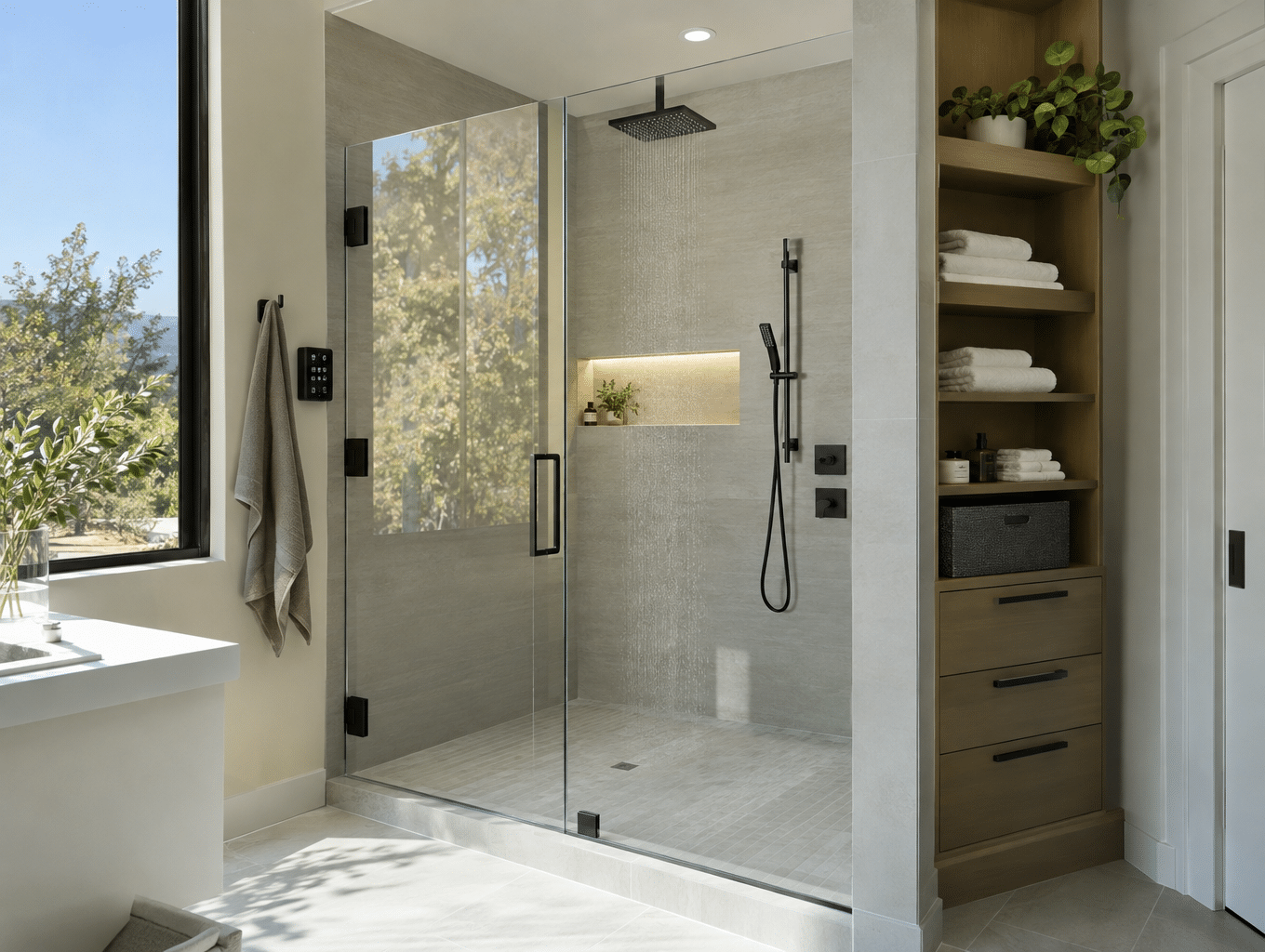
What Should You Consider Before Installing a Smart Shower?
Before choosing a smart shower system, homeowners should identify which features they actually want and how those features will affect the remodeling project.
Several questions are worth discussing during the planning process:
- How many showerheads will the system control?
- Will multiple people use personalized temperature settings?
- Is smartphone or voice control important?
- Can the system operate without an internet connection?
- What happens during a power outage?
- Does the existing plumbing support the desired configuration?
- Will the water heater provide sufficient hot water?
- Where will the digital valve and electrical connections be located?
- How will the system be accessed for future maintenance?
- Are replacement parts and service support readily available?
These considerations help homeowners evaluate the practical value of the system before construction begins. A smart shower should improve the experience of using the bathroom without introducing unnecessary complications.
Is a Smart Shower System the Right Upgrade for Your Bathroom?
Smart shower technology can provide meaningful convenience, particularly in bathrooms shared by multiple people or showers with several water outlets. The ability to select a preferred temperature, save personalized settings, and manage shower functions through a digital controller can make everyday routines more consistent and convenient.
However, the additional technology also introduces installation requirements and long-term maintenance considerations that should not be overlooked.
For some homeowners, a traditional thermostatic shower will provide the right balance of comfort, simplicity, and reliability. Others may find that the flexibility of a digital system is worth the added investment. At Refresh Remodeling, full custom bathroom remodeling allows homeowners to evaluate these options alongside the entire shower design. Plumbing, electrical connections, fixture placement, waterproofing, and access for future maintenance can all be coordinated before construction is complete.
For homeowners throughout the Piedmont Triad and Greater Charlotte areas of North Carolina, the goal should be to choose shower features that make the bathroom more comfortable and functional for the way it will actually be used.

Frequently Asked Questions About Smart Shower Systems
What is a smart shower system?
A smart shower system uses electronic controls and a digital valve to manage water temperature, flow, or multiple shower outlets. Some systems also offer personalized presets, smartphone connectivity, and voice control.
Are smart shower systems worth the money?
Smart shower systems can be worthwhile for homeowners who regularly use features such as personalized temperature settings, multiple showerhead controls, or remote activation. Homeowners who prefer simpler operation may find that a traditional thermostatic shower provides sufficient functionality at a lower cost.
Can you install a smart shower in an existing bathroom?
Yes, but installation may require modifications to plumbing, electrical connections, and finished shower walls. A full bathroom remodel is often the most practical time to incorporate a digital shower system.
Do smart showers use more water?
Not necessarily. Water consumption depends on the flow rates of the connected fixtures, the number of outlets operating simultaneously, and shower duration. Some smart systems include features that can help reduce unnecessary water use.
Do smart showers work without Wi-Fi?
Some smart showers can operate through their wall-mounted controllers without an internet connection, although connected features may become unavailable. The exact capabilities depend on the selected system.
What happens if a smart shower loses power?
Many digital shower systems require electricity to operate and may become unavailable during a power outage. Some products may offer backup power options, so homeowners should review the specific system’s requirements before installation.
Can a smart shower control multiple showerheads?
Yes. Certain digital shower systems can control multiple outlets, including overhead showerheads, handheld fixtures, and body sprays. The number of supported outlets and available control options varies by model.
Are smart showers difficult to maintain?
Smart showers may require additional maintenance considerations because they include electronic controls, sensors, and other components beyond those found in traditional mechanical valves. Proper installation and accessible valve placement can make future servicing easier.
Is a smart shower better than a thermostatic shower?
A smart shower offers additional features such as digital controls, presets, and connectivity. A traditional thermostatic shower provides temperature regulation with fewer electronic components. The better choice depends on the homeowner’s priorities, budget, and desired functionality.
Want to remodel your own home?
Posted in Bathroom Remodel